


Transnistria: From the Destruction of a Culture to Annihilation by Neglect
Bukovina: A European Heritage under Romanian Rule
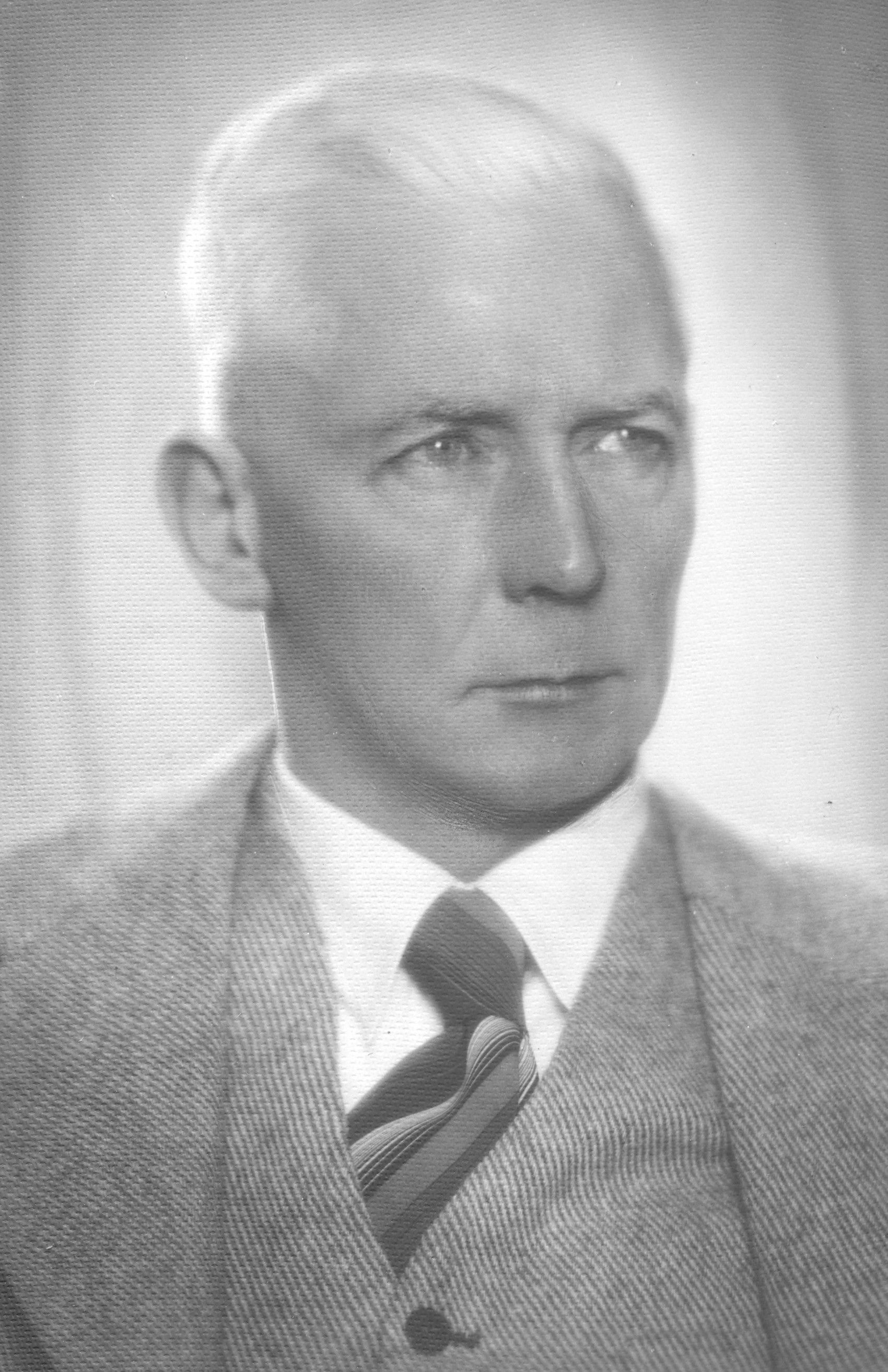
For centuries, Bukovina was a complex tapestry of diverse ethnic groups, in which Jewish life was deeply rooted in the region's identity. A shining symbol of this integration was Dr. Eduard Reiss. As Mayor of Czernowitz, he led the only crown land capital of Austria-Hungary to have a Jew in this highest office. Since the Austrian acquisition, Czernowitz itself had developed from an insignificant settlement into a radiant center of European urbanity – with a prestigious university, magnificent architecture, and a central role as a transport hub between East and West.

However, this fabric had already become fragile in many places before the war. Although a noticeable antisemitism existed even in the Austrian era, exclusion became a systematic practice following the Romanian annexation after 1918. Under Romanian rule, aggressive nationalism and racism became an all-pervading ideology, even if not formal state doctrine. A prominent example of this was the career of the historian Ion I. Nistor (1876–1962). He was a professor and rector in Czernowitz and, as a minister in various governments, relentlessly pushed for Romanianization.

All non-Romanian groups suffered under this displacement: Jewish, Ukrainian, and German officials, teachers, and professors were systematically removed from their posts. While the German-speaking minority fared slightly better than other groups, they were not spared from repression and suffered greatly under the new order.
The Trauma of the "Russian Year" (1940–1941)
A decisive turning point was the so-called "Russian Year." Following the secret supplementary protocol of the Molotov-Ribbentrop Pact, in which Nazi Germany and the Soviet Union divided Eastern Europe between them, Northern Bukovina was assigned to the USSR. On June 28, 1940, the Red Army occupied the territory. The following year was marked by a Soviet regime of terror that echoed the traumatic experiences of World War I. Thousands of intellectuals, landowners, and members of the social elite were arbitrarily arrested and deported to Siberia. This year of oppression later served the returning Romanians as a cynical pretext to defame the Jewish population as "Bolshevik collaborators."
Invasion and the Murder of Chief Rabbi Dr. Mark
With the invasion of the USSR on June 22, 1941, the tide turned again. Romanian troops advanced from the south, while the German Wehrmacht and Einsatzgruppe 10B entered Bukovina from the north. Terror against the Jewish population began immediately. A harrowing symbol is the fate of Chief Rabbi Dr. Abraham Jakob Mark.

On July 7, 1941, he was dragged from his home by SS units and taken to the synagogue. When it was set on fire the next day, they forced Mark onto the roof of the "Schwarzer Adler" hotel to watch the burning of his life's work. On July 9, he was shot by the Germans along with other prisoners on the banks of the Prut river. His wife, Perla Mark, testified to this in 1961 during the Eichmann trial.
The Czernowitz Ghetto and Rescue by Popovici and Schellhorn
On October 11, 1941, Romanian authorities ordered the establishment of a ghetto. In a district around St. Mary's Square (Sfânta Marie Piaţa), where about 5,000 people had previously lived, around 50,000 people were crammed together within days. Catastrophic conditions prevailed in overcrowded washrooms and cellars. The ghetto, enclosed by a wooden fence, served as a logistical precursor for deportations via the railway station.
In the midst of this darkness, there was an act of humanity: Mayor Traian Popovici and German Consul Dr. Fritz Schellhorn worked together to save thousands from deportation. They convinced Antonescu that 20,000 Jews were indispensable as skilled workers for the functioning of the city. Popovici issued protection certificates at great personal risk. Although the number was reduced after his dismissal, together they saved thousands of lives.

The Cruelty of Deportation: The Death Marches
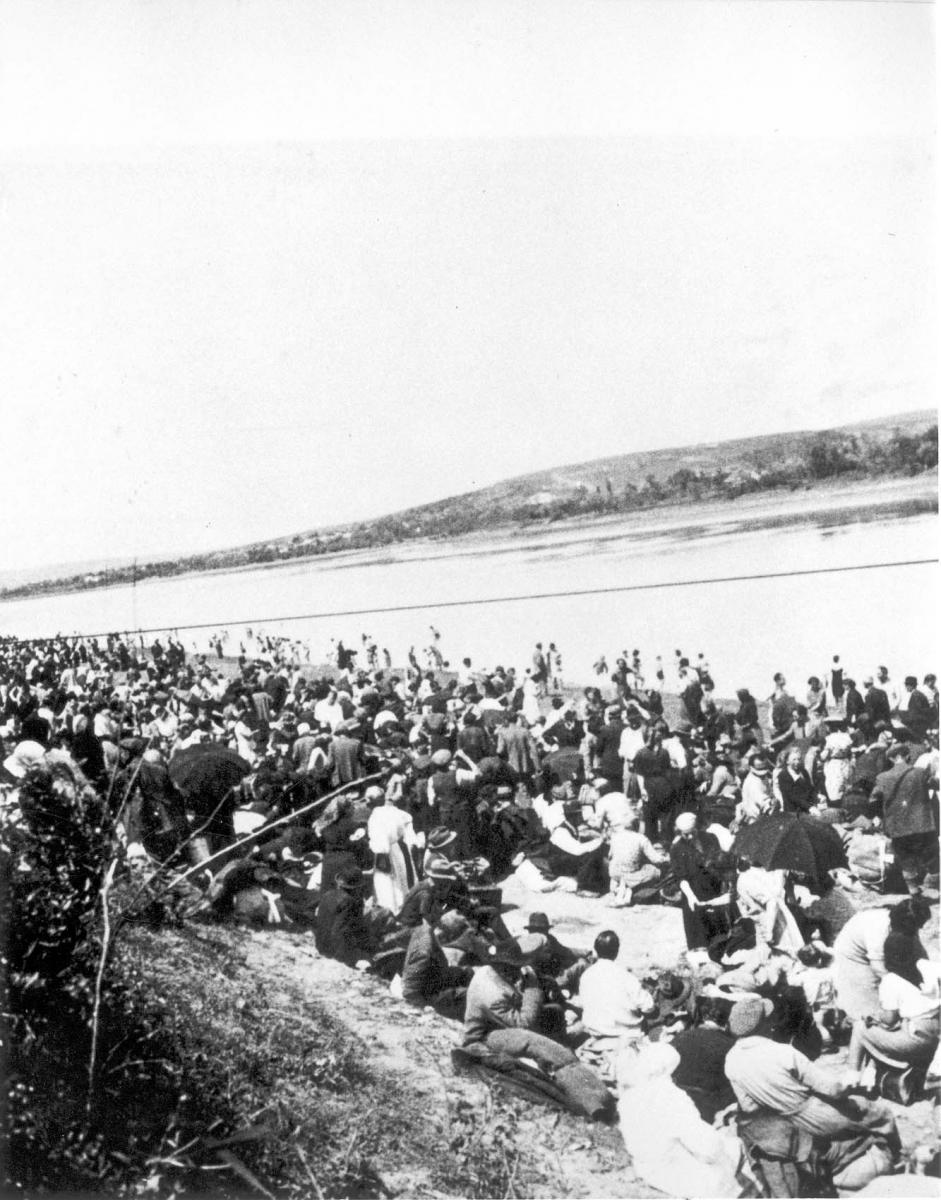
The deportations from Czernowitz and Radautz were not a bureaucratic process, but an outbreak of raw violence. Since they began in June and July, many people wore only light summer dresses. The trains usually stopped after a short journey at the banks of the Dniester. What followed were endless death marches toward the East.
People were mistreated and robbed. Those who fell from exhaustion were liquidated. Thus, Paul Celan's mother was shot in a roadside ditch. On the banks of the Dniester, the deportees were often driven indiscriminately into the floods, where countless drowned or were shot.
Transnistria: Annihilation by Calculated Neglect
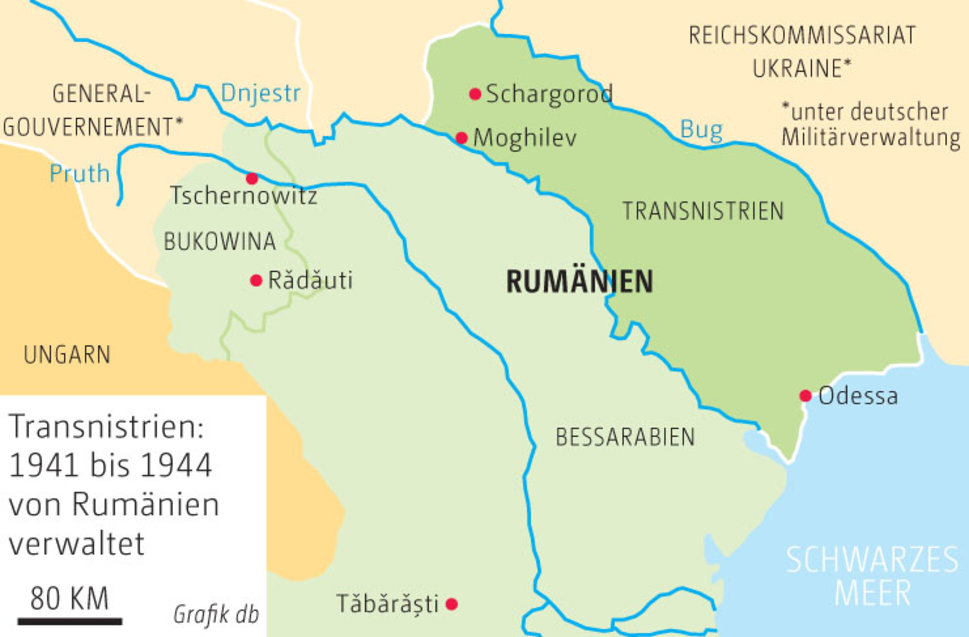
The target area was Transnistria, a territory between the Dniester and the Southern Bug under Romanian administration. History records that Hitler and Antonescu met several times to discuss the persecution. The brutality of the Romanian troops at the entry points was so excessive that even reports from the Wehrmacht and the SS criticized the "inhumane" treatment – out of concern for military order.
In Transnistria itself, there was almost nothing. The survivors, "hunted restlessly like dogs," were driven into ruins, former collective farms, or pigsties without windows or doors. There was no food, no clean water, and no medicine. The little food available could only be bartered from the local peasant population for the last of their belongings. The currency conversion from Rubles to Lei destroyed any remaining savings and plunged even the wealthy into misery.
The area was hermetically sealed as the "Backyard of the Romanian Empire"; the unwanted were locked away – out of sight, out of mind. In addition to the Jewish population, thousands of Roma and Sinti were also murdered here. The authorities simply left the people to die.
When the bitter steppe winter arrived with temperatures below -30 degrees, the light summer clothing became a death sentence. Hunger edema was followed by typhus, which spread uncontrollably due to lack of hygiene. Entire families died in the ruins; the dead often lay with the living for days. When the Red Army arrived in the spring of 1944, Transnistria was a vast open-air cemetery.
The Bitter End and the Difficult Return (1944–1947)
In the spring of 1944, the Red Army fought its way inexorably westward, eventually reaching the Transnistria region. While the dictator Ion Antonescu was overthrown in Romania in August 1944, this did not mean an immediate homecoming for the camp survivors. The way back to Bukovina was arduous and full of bureaucratic and physical obstacles; for many, it took until 1947 before they reached Czernowitz or Radautz again. But the home they found was a different one.
The returnees were not welcome in their own city. Most houses and apartments were by now occupied by other people who had no intention of leaving the stolen property. Additionally, there was a targeted population policy by the new Soviet rulers: the leadership systematically settled Russian-speaking people, mainly from eastern Ukraine – especially from Kharkiv – in Bukovina. This was done partly because the eastern cities had been massively destroyed by the German "scorched earth" tactic, but also to undermine Ukrainian nationalism by settling loyal Soviet citizens.
The Holocaust played almost no role in post-war Soviet historiography. The specifically Jewish tragedy was suppressed; officially, there were only "victims of fascism" or "peaceful Soviet citizens" who had fallen in the Great Patriotic War. The individual suffering in Transnistria thus became part of a collective Soviet myth of heroism and victimhood, in which there was no room for Jewish identity.
Flight, Displacement, and the Camps on Cyprus
Jews who had survived the horrors of Transnistria faced renewed oppression in the Soviet Union. The survivors were often not only allowed but practically pushed to leave Bukovina for Romania. They were promised onward travel to Palestine (Erez Israel), but for many, this became another odyssey of suffering. Due to the restrictive immigration policy of the British, thousands were stranded in detention camps on Cyprus.
There, the misery repeated itself: people who had just escaped the cold of Transnistria lived for years in tents, exposed to the elements. When they were finally allowed to immigrate after the founding of the State of Israel, those without existing local contacts or relatives were often imprisoned again – especially in the Athlit camp. For many Bukovinian Jews, the path to freedom was thus paved with barbed wire that accompanied them for nearly a decade.
Jewish Life in the Soviet Underground
In Bukovina itself, Jewish life retreated into the private sphere during the Soviet era. As the official state religion was atheism, any religious practice was considered suspicious. Nevertheless, Jewish communal life continued in secret, often with the knowledge of the authorities but as invisible as possible. Initially, the synagogue on Russkaja Street was still in operation.
In the 1950s, however, the synagogue on Vul. Ruska had to cease operations under pressure from the authorities. After that, only the Benjamin Synagogue on Lukyjana Kobylytsin Street remained as the last official house of prayer, where Jewish tradition was continued under difficult conditions.
Rebirth in the Present
After the collapse of the Soviet Union and the independence of Ukraine, a slow revival of Jewish infrastructure began. Today, Jewish heritage is once again a visible part of the cityscape. A central symbol of this renaissance is the Korn Synagogue, which is now open again for services and community life.